

You may have heard the term agrivoltaics, which refers to the combination of agriculture and electricity production using solar panels. However, there is another form of energy coactivity that is still relatively unknown: aquavoltaics.
This system combines aquaculture and solar production, and is particularly relevant in light of rising energy needs. It also provides a concrete response to the increasing scarcity of available land. In this context, fish ponds represent a strategic opportunity, as they offer energy, economic, and environmental benefits. In this article, we will look at how aquavoltaism works, using the example of our project developed in Taiwan in 2020.
What is aquavoltaism ?
Aquavoltaism (also known as the hybrid fishing-solar model) is an innovative concept that combines photovoltaic electricity production with aquaculture. Floating solar panels generate carbon-free energy, while the reservoirs retain their function as breeding grounds, particularly for fish, shrimp, and crabs. This concept has a major advantage: it optimizes land use by combining two complementary activities. This avoids the need to use new natural or agricultural spaces. In a context marked by the increasing scarcity of available land and growing energy needs, aquavoltaism appears to be a relevant solution. Indeed, it makes it possible to reconcile the energy transition with aquaculture production.
In addition to producing carbon-free electricity, installing photovoltaic panels above the ponds brings several direct benefits to the farm. The partial shade created by the floating structures limits water evaporation. This advantage is essential in regions exposed to periods of drought or high temperatures. In addition, this partial coverage helps regulate water temperature. It can thus improve the living conditions of the species being farmed. This also has a positive impact on energy production. Indeed, photovoltaic panels see their efficiency decrease as their temperature rises. Thanks to the cooling effect provided by the water, floating solar power plants can perform better than conventional land-based installations.

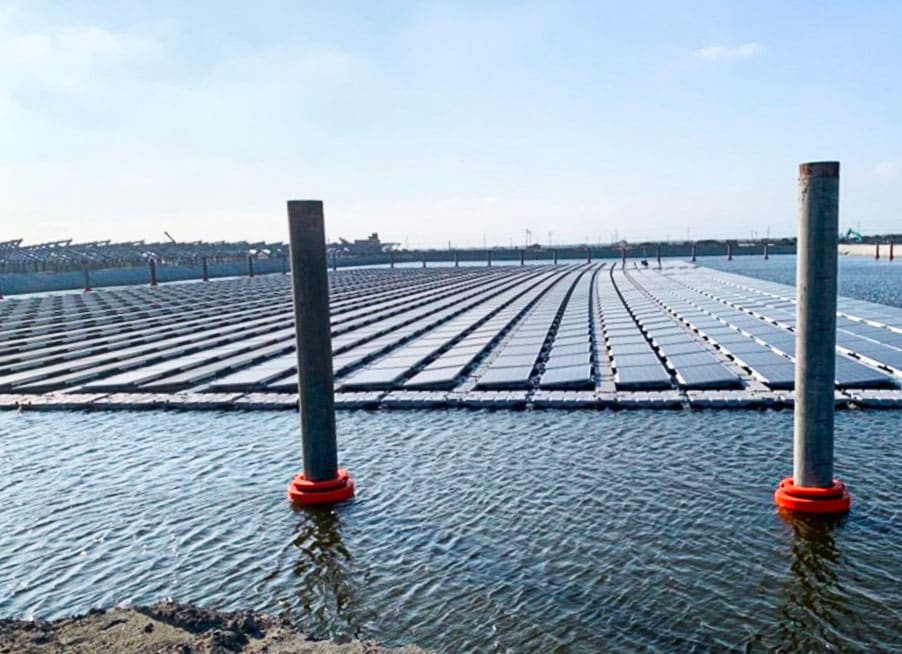
In addition, reducing direct exposure to sunlight can slow down the proliferation of invasive algae. These algae are often responsible for a deterioration in water quality and, as a result, increased maintenance costs. Finally, contrary to popular belief, the installation of a floating photovoltaic power plant does not alter water quality or the conditions necessary for farming. When designed correctly, it coexists with aquaculture activities without disrupting the development of farmed species, whether fish or shellfish.
By producing renewable energy locally, aquavoltaism also helps to boost local economies by creating jobs in the construction, operation, and maintenance of facilities. It therefore represents an environmental, economic, and social opportunity.
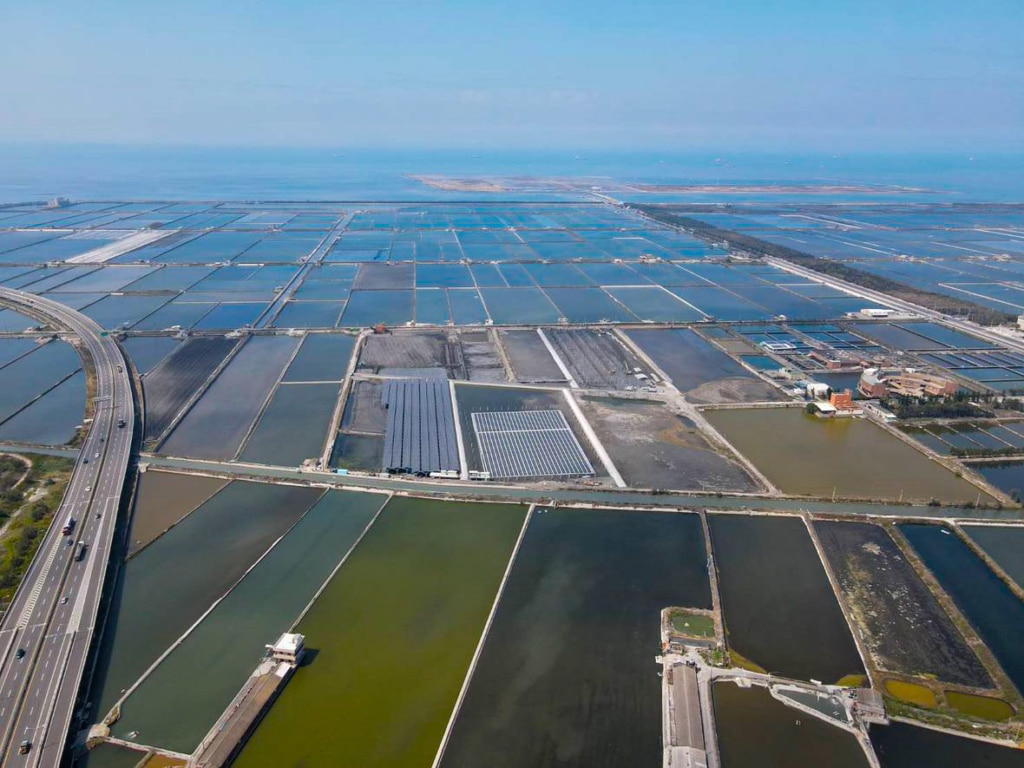
Case study
Taixi’s project
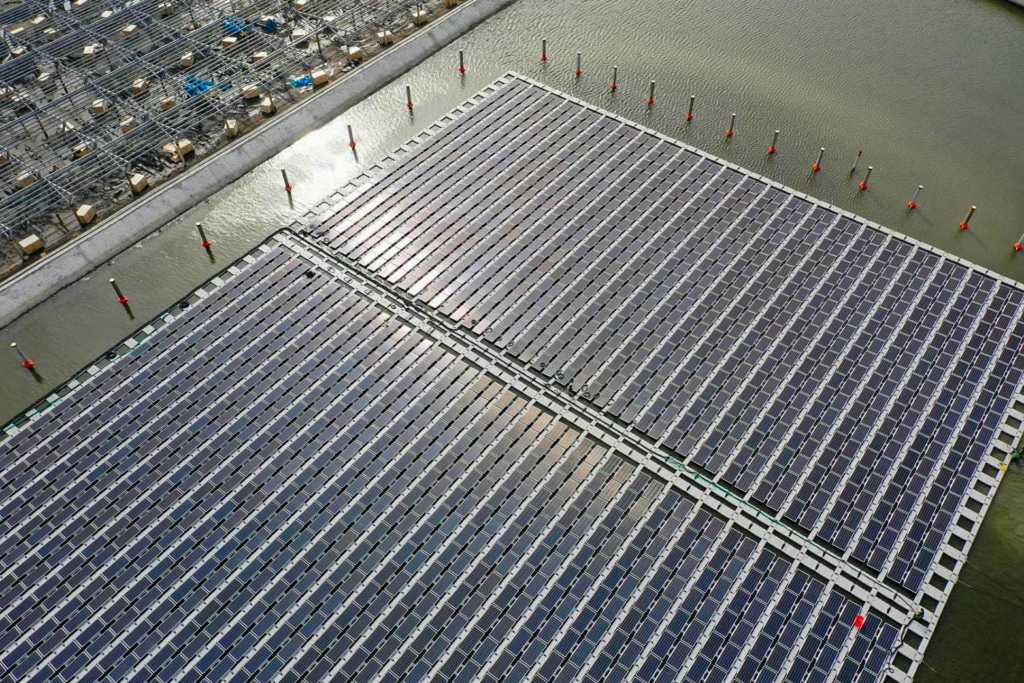
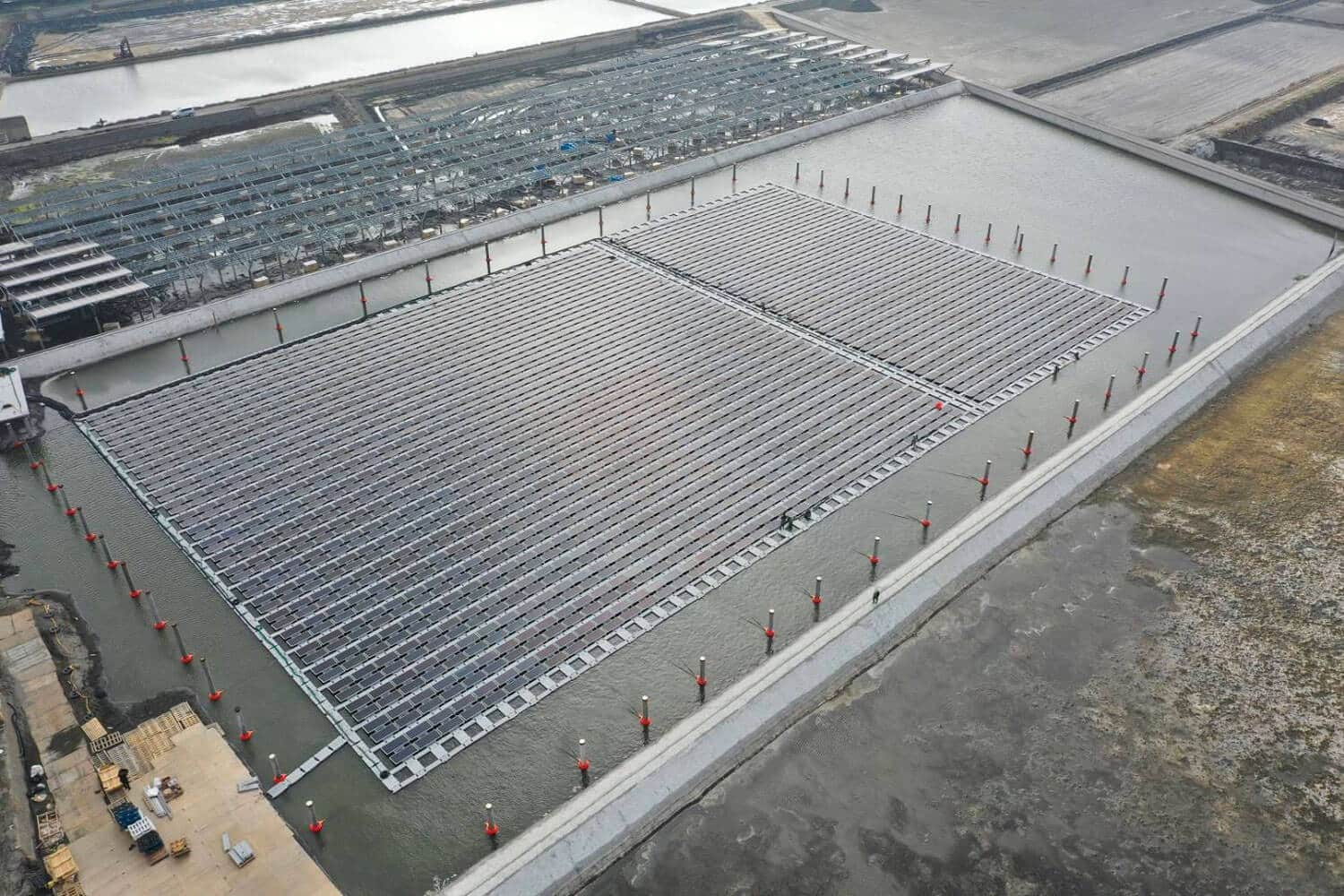
Our Taixi aquavoltaic project, located in Yunlin County, Taiwan, perfectly illustrates the potential of this application. Installed in 2022 on a saltwater pond, the plant covers 0.75 hectares of a total area of 1.97 hectares, with a maximum coverage rate of 39%. This size allows fish farming to continue while ensuring significant electricity production.
The floating system, supplied by Ciel & Terre via the Hydrelio® aiR solution, covers part of the water surface while limiting the impact on the ecosystem. This project is considered one of the first large-scale floating photovoltaic power plants installed on a fish farm.

History of the project
In 2016, Cédric Jaeg, former CEO of Laketricity Taiwan, joined a working group dedicated to developing solar power plants on fish ponds. The following year, in 2017, Laketricity Taiwan won a tender to supply the floating solution that would be used to test floating photovoltaics (FPV) on several aquaculture ponds.
This marked the start of environmental and feasibility testing and analysis for the project. After three years of testing, which ended in 2020, the results were positive and demonstrated the viability and efficiency of the system.
Encouraged by these results, the Fishery Research Institute, mandated by the relevant ministry, was tasked with continuing the development of aquaculture photovoltaics. The project focuses on regions with high potential and works closely with local authorities.
Keys figures of this project
- 1024 kWp
- 2592 modules
- 1383 MWh during the first year
- The equivalent of the consumption of 353 households
- 704 tons of CO2 saved

Challenges and solutions
Installing a floating photovoltaic power plant on an aquaculture site remains a demanding task, as it must be adapted to the constraints of fishing and pond maintenance. In Taixi, the power plant was positioned outside the main fishing areas in order to integrate with fish farming activities. The anchoring system was also designed to best adapt to the constraints of the site. In particular, it is based on pillar anchoring, which optimizes the available space. In addition, this solution adapts to the many variations in water level specific to this type of pond.
This project demonstrates that floating photovoltaics can become a key solution to support Taiwan’s energy transition. In addition, it enhances the value of the country’s large number of fish ponds.
The results of the Taixi project clearly show that aquavoltaics is a viable, efficient, and advantageous solution for farmers. By combining floating solar panels and aquaculture, it is possible to produce renewable electricity while maintaining fish farming activities. In addition, many ponds in Taiwan, but also around the world, could accommodate this type of installation. Thus, the potential for developing floating photovoltaics on aquaculture ponds is very significant.
Aquavoltaism is therefore a solution for the future that is both environmentally friendly and economical. Indeed, it makes it possible to meet growing energy needs while making use of already exploited areas.
Author : Lou-Ann Gavignet


