

Floating solar power plants are generally installed on artificial lakes, most of which are rarely used or not used at all. However, in some cases, these bodies of water are an important part of local life, supporting activities such as tourism, fishing, and aquaculture. Therefore, it is essential to carefully plan each project so that it integrates smoothly with existing activities and does not disrupt the ecological or economic balance of the site.
At Laketricity, we actively ensure that our floating solar power plants integrate seamlessly into their surrounding environment. To achieve this, we design and develop bespoke solutions tailored to each site. In addition, we take into account biodiversity preservation as well as the social and economic activities present in the area.
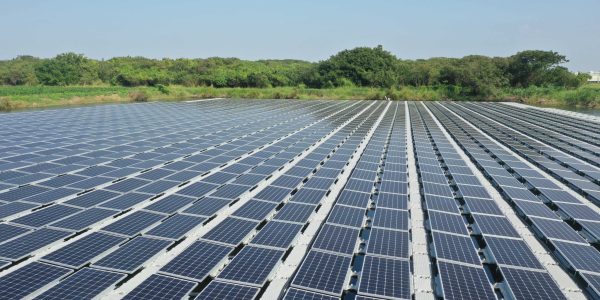
Projects designed to integrate seamlessly with the site’s existing activities
The development of floating solar power is increasingly based on a strategy that integrates existing uses of water bodies. Before any installation takes place, Laketricity carries out a detailed analysis of how the site operates in order to avoid conflicts of use and to minimise environmental impacts. This approach relies primarily on two key elements: environmental impact assessments and consultation with local stakeholders.
The importance of impact assessments
Floating solar power plant projects are generally subject to in-depth impact assessments. These assessments evaluate the potential effects of the installation on the environment, as well as on existing activities both around and on the water body.
In particular, these analyses cover aquatic biodiversity, water quality, bathymetry, and water circulation. They also help to identify existing uses such as fishing, water sports, irrigation, and drinking water management. Based on these findings, developers can adapt the project design by limiting the coverage rate of the water body, preserving certain areas, or modifying the layout of the panels. Ultimately, the goal is to design installations that integrate as seamlessly as possible into their environment and do not disrupt existing activities.
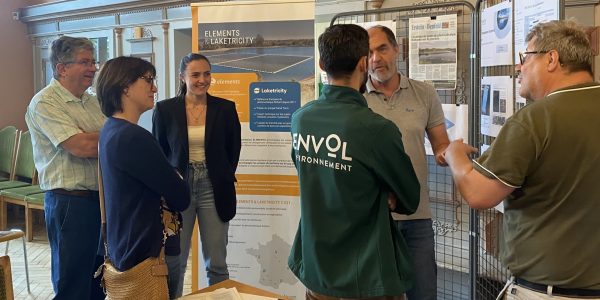
The importance of consultation with local stakeholders
Beyond technical analyses, the success of a floating solar project also depends on dialogue with local stakeholders. Local authorities, water body managers, associations, and users such as fishermen and residents are often involved at various stages of the project.
In practice, this consultation helps to better understand local expectations and constraints. It may lead to adjustments in certain aspects of the project, for example by preserving areas dedicated to leisure activities. As a result, involving local stakeholders at an early stage allows project developers to foster acceptance of the installations and to develop projects that are compatible with the area’s existing uses.
Examples of co-activities and their implementation
Whilst certain activities may seem difficult to reconcile with the installation of floating solar panels, several projects demonstrate that coexistence is entirely possible when the arrangements are planned. In various contexts, solutions have been implemented to enable floating solar to coexist with other uses of the water body, whether agricultural, economic, or tourist related.
Irrigation reservoirs: a compatible agricultural use
Irrigation reservoirs are among the most suitable sites for the development of floating solar power. These artificial bodies of water are often underused for other activities, and their surface area can accommodate photovoltaic installations without disrupting their primary function.
In some cases, the panels cover only part of the basin in order to maintain access to hydraulic infrastructure. In addition, the presence of the modules can help to reduce water evaporation, which is particularly beneficial in regions subject to water stress. As a result, this approach helps preserve a resource that is essential for agricultural activity.


Fish farming: a complementary activity supporting livestock farming
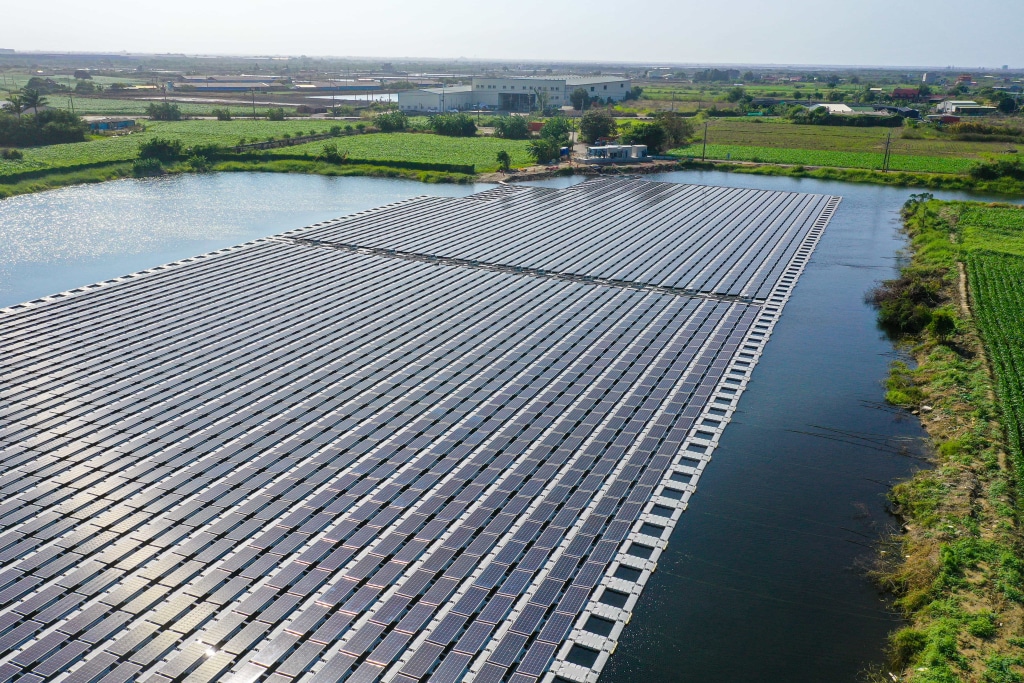
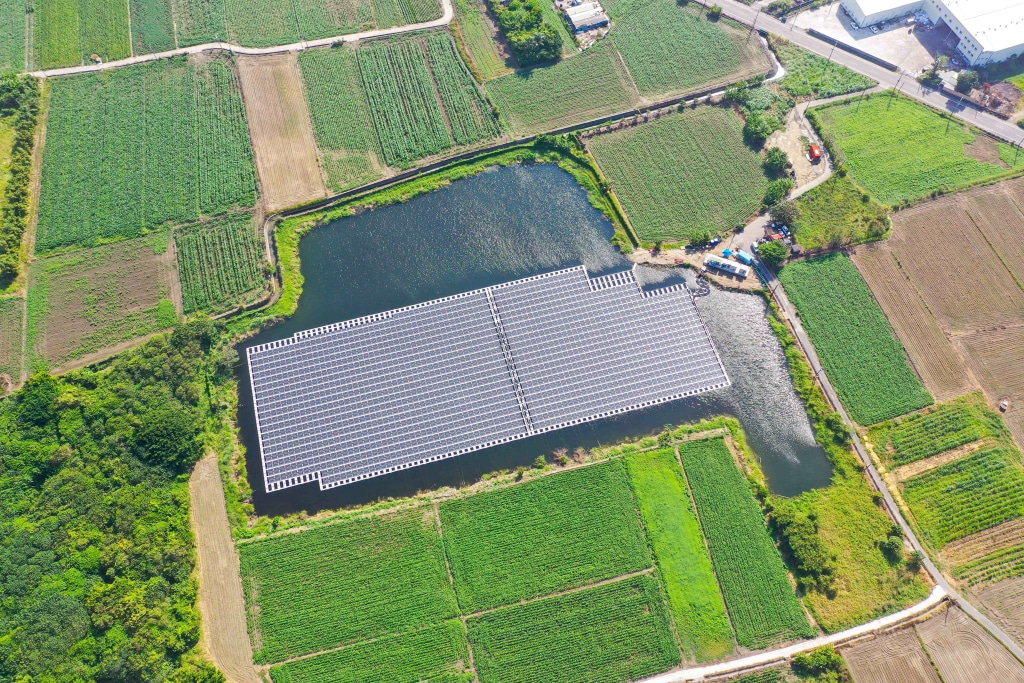
Fish farming is another example of a potential complementary activity. At certain sites, floating power plants are installed above aquaculture ponds, there by enabling production to continue while also generating renewable energy.
Our “Taixi” project in Taiwan illustrates this type of integration. The solar installations have been designed to adapt to existing infrastructure and to allow fish farming activities to continue. In particular, the layout of the site and the positioning of the structures take into account the needs of farmers, especially regarding access to the ponds and fish stock management.
Fishing: maintaining accessible areas
In some water bodies open to the public, fishing can continue thanks to the partial siting of power stations. The facilities then occupy only part of the surface area, leaving areas free for anglers.
Traffic corridors or dedicated areas can also be preserved and demarcated to ensure access to the water body and minimise disruption to users.
Exemple of Taixi
One of our ongoing projects for the Hindisheim floating solar project is a concrete example of the coexistence of a floating photovoltaic power plant and fishing activities. Following in-depth consultation with the town hall and the local fishing association, the project was designed to allow for the harmonious coexistence of both uses.
In particular, the layout of the plant was planned to completely avoid the northern area of the water body, to preserve easy access for anglers and maintain the areas usually used for this activity.


Tourism and leisure: integrating the project into the landscape
Finally, some projects aim to blend into sites frequently used by the public. In such cases, the development of the area surrounding the water body can play an important role. Walking paths or viewing points can be created around the site to maintain its appeal.
Landscaping measures can also be implemented to mitigate the visual impact of the plant or to promote biodiversity. For example, green islands or plantings can be used to partially ‘camouflage’ the installations and better integrate them into their surroundings (incorporating nesting boxes, pollination, etc.).
These examples show that the compatibility between floating solar and other activities depends largely on the project design and the measures put in place to facilitate the coexistence of different uses.
These various examples of coexistence demonstrate just how floating solar can be both an innovative and versatile solution. The strength of this system lies in its ability to adapt to the specific characteristics of each site and to existing uses. Through tailored design, in-depth impact assessments and consultation with local stakeholders, it becomes possible to develop projects that combine renewable energy production with the continuation of existing activities. This approach thus promotes more sustainable installations that are better accepted by local communities.
Author : Lou-Ann Gavignet


